Wales
She SaidWales is presented as the home from which Laura Madden considered whether to speak publicly about Harvey Weinstein. It is not the setting of the first interview: Jodi Kantor travelled to meet Madden while she was on vacation in Cornwall. But Wales anchors the account of Madden’s family life and the decision that became public just before her scheduled surgery, bringing the private consequences of disclosure into view.
A home distinct from her beginnings
The book places Wales within a journey that began elsewhere. In 1992, Madden was a young woman from rural Ireland who had grown up on an estate her family had owned for generations. Her parents kept the property going as a hotel, though the family had little fortune left. Madden had not attended university and had rarely been away from home. After a film shot nearby, she found work handling extras, then joined the production of Into the West, starring Gabriel Byrne and Ellen Barkin. That work led to an encounter with Weinstein in a Dublin hotel room, where she had been sent on an errand as a new production assistant.
By the time of the reporting, Madden lived in Wales and was raising a family there. The change of place matters to the shape of her account: the young employee at the beginning of her career appears later as a mother weighing the personal costs of revisiting that experience. The book identifies her not only as a former assistant to Weinstein but as a stay-at-home mother in Wales, making her present life a central part of the context for her decision.
The meeting away from home
On August 3, Kantor met Madden at a picnic table in Cornwall, where Madden was vacationing. Madden had said she could spare only about an hour. She had been hesitant to meet, and her story had so far emerged haltingly over the phone. Kantor travelled from London despite sold-out flights: a five-hour train journey was followed by a bus when the train broke down. She considered the meeting essential because Madden’s account connected with information the reporters had already gathered.
The distance between Wales and the interview setting is part of the reporting circumstances, not a change in Madden’s home. At the beach, Kantor saw a careful witness who distinguished what she did and did not remember and offered measured detail. Madden had earlier said she could never tell the story publicly. Her reluctance was bound up with a fear of being judged for not having run away, a feeling of fault that had never lifted. The meeting therefore did not begin with a ready public statement; it brought into focus the pressures surrounding a woman who had thought disclosure impossible.
Family life and the decision to speak
The Wales chapters of Madden’s life include both happiness and upheaval. She had experienced deep happiness through motherhood, but her marriage had just ended, and she was working out how to raise four children, aged eleven to sixteen, as a single mother. She had not worked full-time since leaving Miramax. After briefly running a small catering business, she was trying to complete a landscape-design course while her confidence was low. The account also records her recent breast cancer, the loss of one breast, and the second mastectomy and reconstructive surgery she was due to undergo.
Five days before that surgery, Madden wrote to Kantor that she was willing to go on the record. Her email explained that she felt able to speak because she no longer worked in the film business and believed her livelihood would not be affected. She also said that people working under Weinstein had tried to persuade her to remain silent, though she had no gagging order. Madden framed her choice as partly for women whose jobs or marriages might be affected if they spoke, and as a mother’s refusal to let her daughters accept bullying as normal. She wrote, “I am happy to go on record.”
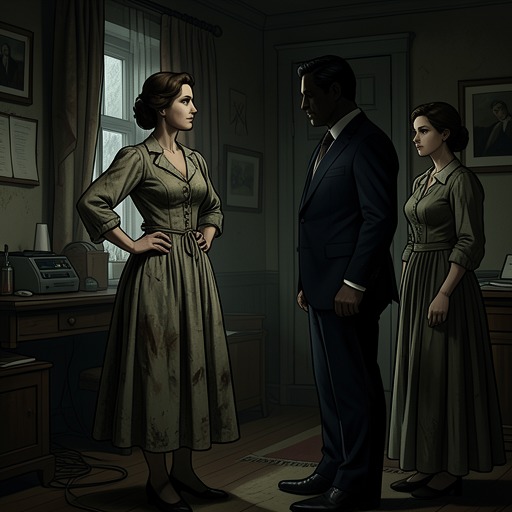
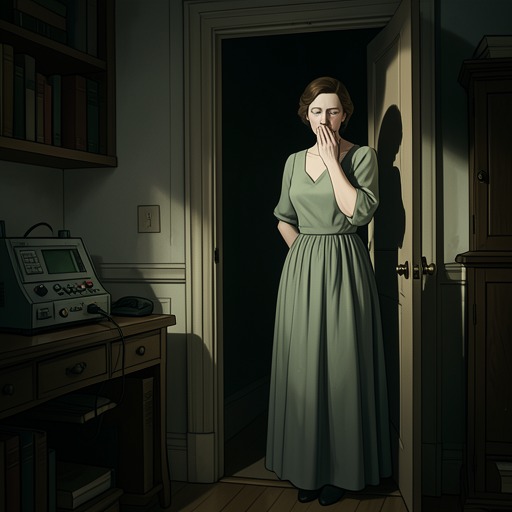
The decision had first been brought into the household the previous evening. In her kitchen in Wales, Madden told her older daughters, Gracie and Nell, that she needed to share something. They expected the subject to be her operation; instead, she told them what Weinstein had done years earlier and that a newspaper article was about to recount it. Their shock led to another discovery: some of their girlfriends had recently faced drunken boys preying on them and did not know what to do. Madden, in turn, was shocked that these experiences were so close to her daughters’ lives. The home conversation connected her past account to a problem the teenagers’ generation was already encountering.
Wales as the setting of disclosure
Wales gives the narrative a concrete domestic frame for a choice often described in terms of journalism and public speech. Madden’s decision took shape alongside divorce, care for her children, illness, and the prospect of major surgery; her home was where she first told her daughters, not a public stage. The reporters could not promise when their article would appear, and Madden had worried about being the only woman from the London office on the record. Her questions about how many women would speak, and from which office and year, show that the decision also depended on whether she would be isolated.
When the article was about to appear, Madden’s account moved from her Welsh kitchen into print. The book describes the change without suggesting that speaking erased the difficulties she faced: the surgery was still days away, and her family circumstances remained unsettled. Wales thus marks both the private setting in which disclosure became possible and the ordinary life that disclosure risked exposing. Its significance in the narrative lies in that close connection between a public account of workplace abuse and the family life from which Madden made her choice.